Here’s a counterintuitive way to make someone like you more: ask them for a small favor. It sounds backwards, but it’s a well-known idea called the Benjamin Franklin effect, and it has useful lessons for building customer relationships, communities and brand loyalty.
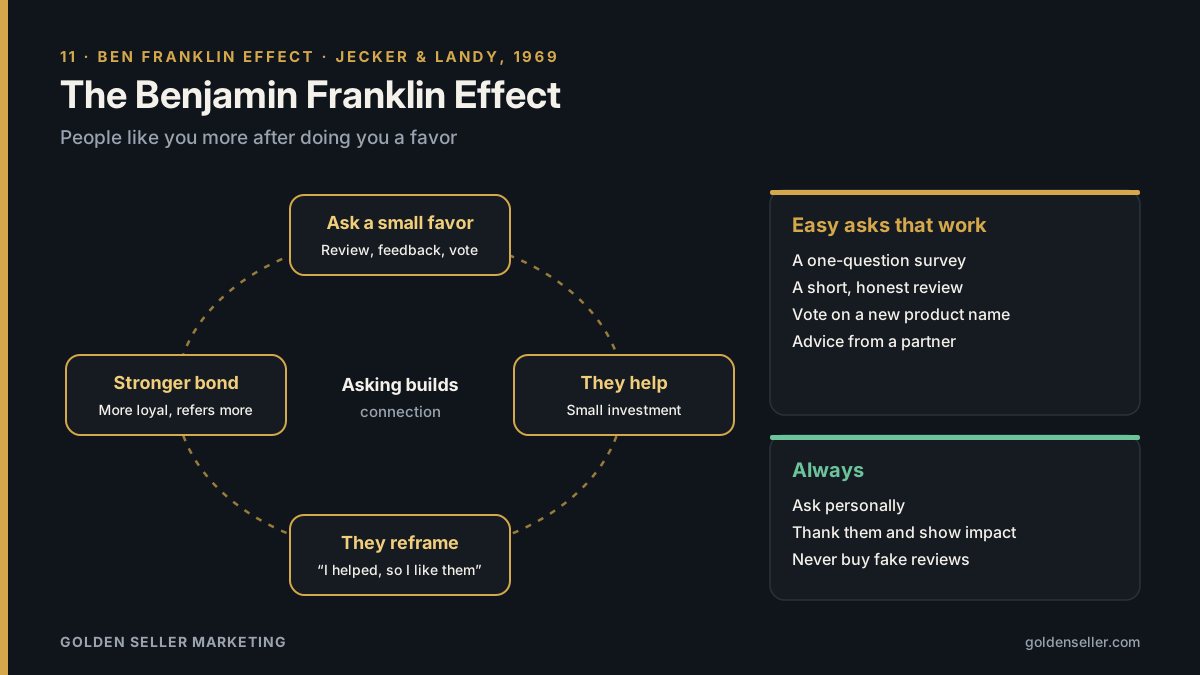
The Benjamin Franklin effect is the tendency for people to like someone more after doing them a favor. In marketing, it suggests that inviting customers to contribute, through feedback, reviews, referrals or participation, can deepen their connection to your brand.
Where the Benjamin Franklin effect comes from
In his autobiography, Benjamin Franklin described a rival in the Pennsylvania legislature who opposed him. Instead of flattering him, Franklin asked to borrow a rare book from the man’s library. The rival lent it, Franklin returned it with a note of thanks, and afterward the man treated him with new courtesy; they became lasting friends. Franklin summed up the lesson with an old maxim: “He that has once done you a kindness will be more ready to do you another, than he whom you yourself have obliged.”
What the research says
Psychologists Jon Jecker and David Landy tested the idea in a 1969 study published in Human Relations. Participants who were personally asked by the researcher to return money they had won rated him more favorably than those who weren’t asked. A 2015 study by Yu Niiya found similar results, suggesting the effect may work partly because being asked for a favor signals that the asker likes and trusts you.
A common explanation is cognitive dissonance: if I helped you, I must like you. The research base is smaller than for some other effects here, so it’s best treated as a helpful tendency rather than a guaranteed tactic.
Why it matters in online marketing
Most marketing focuses on what a brand gives: discounts, content, free trials. The Franklin effect points to the value of what customers give. When customers invest a little effort in your brand, they often feel more connected to it.
- Reviews: Asking happy customers to leave a review helps your local SEO and can strengthen their own loyalty.
- Feedback: Surveys and “help us improve” requests make customers feel valued.
- Referrals: People who recommend you become more committed to you.
- Community participation: User-generated content, beta testing and product votes give customers a stake in the brand.
How to apply the Benjamin Franklin effect
Ask for small, easy favors
Franklin asked for a book, not a fortune. Ask customers for one quick thing: a one-question survey, a short review, a vote on a new product name.
Make the request personal
A personal ask from a real person works better than an automated blast. In the Jecker and Landy study, the effect appeared when the experimenter asked personally.
Thank people and show impact
Franklin returned the book with thanks. Close the loop: tell customers how their feedback changed something.
Invite co-creation
Let customers help shape products, content or campaigns. People value what they help build.
Ask partners for advice
Asking a referral partner or industry peer for their opinion often builds stronger relationships than pitching them.
The Benjamin Franklin effect and branding
Brands that invite participation turn customers into contributors. Communities, ambassador programs and customer advisory boards all give people small ways to invest in the brand. Over time, those contributions build an emotional stake that pure advertising rarely matches. Many of the reviews that power a strong Google Business Profile come from customers who were simply asked at the right moment.
Common mistakes
- Asking for too much, too soon. Big asks before trust exists can backfire.
- Asking without thanking.
- Incentivized fake reviews. Platform policies and FTC rules prohibit fake or misleading reviews. Ask for honest feedback only.
Frequently asked questions
Why does the Benjamin Franklin effect work?
Common explanations include cognitive dissonance (people justify their help by liking the person) and the signal that being asked shows the asker likes and trusts them.
How can businesses use it ethically?
Ask for genuine feedback, honest reviews and real participation, and always thank people and show the impact of their help.
Put behavioral psychology to work for your brand
Golden Seller Marketing is a San Diego digital marketing agency built on behavioral marketing: we use how people actually notice, decide and remember to shape websites, ads, content and brands. This article is part of our series on the 11 laws of human psychology every marketer should know. Explore our branding, web design and online marketing services, or contact us at (855) 853-3456.